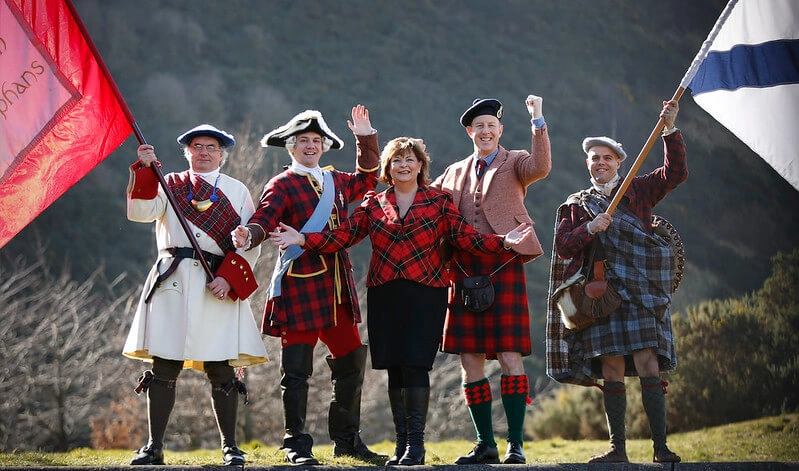
Scottish clans shaped the country for more than a thousand years. They were more than family groups. They were armies, governments, and communities all wrapped into one.
If you’ve ever wondered why Scottish surnames carry such weight, or why tartan patterns differ from clan to clan, this guide explains it all from the beginning.
Understanding the clan system is one of the best ways to make sense of Scottish history as a whole.
What Are Scottish Clans and Where Did They Come From?
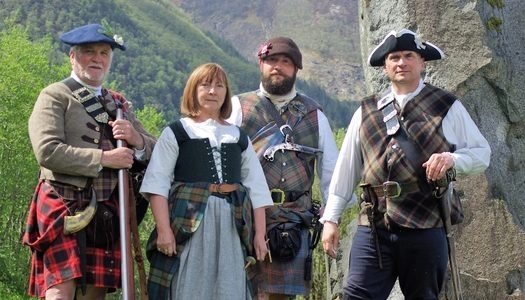
Scottish clans grew out of the social structure of early medieval Scotland. The word “clan” comes from the Gaelic word “clann,” meaning children or descendants.
Each clan gathered around a chief, a leader who held authority over the land and the people who lived on it. Loyalty to the chief ran deep and could mean the difference between protection and exile.
The clan system took its strongest form in the Scottish Highlands, where geography made central government weak and local allegiances essential. By the 13th century, the major clans were well established with territories, heraldry, and traditions of their own.
Famous Scottish Clans and Their Histories
Some clans became famous through battle, others through politics, and some through the sheer number of descendants they spread across the world.
Clan Campbell grew into one of the most powerful in Scotland, closely allied with the Scottish crown and controlling vast territories in Argyll. Their history is long and controversial, including their role in the Glencoe massacre of 1692.
Clan MacDonald was the great rival of the Campbells and at one point the most powerful clan in the Highlands, with the Lords of the Isles controlling much of the western seaboard. Their story is full of conflict, ambition, and pride.
Clan Bruce gave Scotland one of its greatest kings. Robert the Bruce led the country to victory at Bannockburn in 1314, securing Scottish independence and cementing his place in national history.
Clan Fraser is another name deeply woven into Scottish identity. The Frasers fought at Culloden and their story has found new audiences through popular culture in recent years.

Scottish Clan Tartans and Their Meaning
The tartan system as it’s known today developed later than most people assume. Much of it was formalised during the visit of King George IV to Scotland in 1822, when Sir Walter Scott organised the event around Highland dress and clan identity.
Before that, tartan existed but wasn’t always tied to specific clans. Regional patterns were more common than family ones.
Today, each clan has one or more registered tartans, and wearing your family’s tartan is a way of connecting to your Scottish heritage. The Lyon Court in Edinburgh officially records clan tartans and coats of arms.
If you want to find your clan tartan, the Scottish Tartans Authority maintains a searchable database with thousands of registered patterns.
The Legacy of Scottish Clans Today
The Scottish clans didn’t disappear. They adapted. Today, clan societies exist around the world, particularly in countries where Scottish emigrants settled in large numbers, including Canada, the United States, Australia, and New Zealand.
Clan gatherings take place every year in Scotland and abroad. The Clan Gathering of 2009 drew tens of thousands of people from around the world to Edinburgh, many tracing ancestry going back hundreds of years.
Clan chiefs still exist, and some still live on land held by their families for centuries. The role is largely ceremonial today, but the connection to history is genuine.
If your surname traces back to Scotland, chances are you belong to a clan. The records have survived remarkably well, and tracing your clan connection is often more straightforward than you’d expect. Scottish clans remain one of the most enduring parts of the country’s identity, and exploring your own link to that history is worth every step.